Tamoxifen
In brief
Tamoxifen blocks oestrogen’s effects in breast tissue and is used in hormone-sensitive breast cancer care. It may be part of treatment after surgery or a plan to reduce risk in selected people.
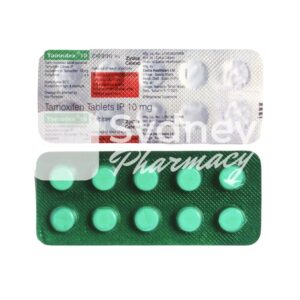
Tamoxifen (tamoxifen citrate) is a hormonal anticancer medicine that blocks the effect of oestrogen on breast tissue. It is best known under the brand name Nolvadex and is used mainly in the treatment of breast cancer that is sensitive to hormones. This page describes Tamoxifen 10mg and 20mg tablets as offered by Sydney Pharmacy, what the official product information says about them, and the safety points every patient and carer should know. Tamoxifen is a prescription-only medicine in Australia, and it should be started and monitored by a doctor.
What is Tamoxifen?
Tamoxifen belongs to a class called selective oestrogen receptor modulators, often shortened to SERMs. Unlike a hormone, it does not simply switch oestrogen activity on or off everywhere in the body. In breast tissue it acts mainly as an anti-oestrogen, while in other tissues, such as the lining of the uterus and bone, it can behave partly like oestrogen. This mixed action explains both its benefits and several of the warnings in the product information.
Tamoxifen has been used for many years and is included in the product information of many countries. Because the wording of approved uses differs between countries and between products, always check the leaflet that came with your own medicine.
Tamoxifen basic information
| Item | Details |
|---|---|
| Active ingredient (INN) | Tamoxifen citrate |
| Medicine class | Selective oestrogen receptor modulator (anti-oestrogen) |
| Brand names | Nolvadex, and generic tamoxifen products |
| Form | Tablets |
| Strengths offered here | 10mg and 20mg |
| Pack sizes offered here | 30, 60, 90, 120, 180 and 360 tablets |
| Categories | Cancer; women’s health |
| Legal status in Australia | Prescription-only medicine |
How Tamoxifen works
Some breast cancers grow in response to oestrogen. The cancer cells carry oestrogen receptors, and when oestrogen attaches to them it signals the cells to divide. Tamoxifen and its active breakdown products compete with oestrogen for these receptors. When tamoxifen occupies the receptor, the growth signal is blocked, which slows or stops the growth of oestrogen receptor-positive tumour cells.
This is why the status of the tumour matters. Tamoxifen is of benefit mainly when the cancer is hormone-receptor positive, and your oncologist will confirm this from laboratory tests on tumour tissue. The liver converts tamoxifen into active metabolites, and some of that conversion depends on the enzyme CYP2D6, which is the reason some other medicines can interfere with it (see the interactions section below).
What Tamoxifen is used for
According to product information, Tamoxifen is used in the treatment of breast cancer. Depending on the country and the product, this can include:
- treatment after surgery, with or without radiotherapy, to reduce the chance of the cancer returning in women with hormone-sensitive early breast cancer;
- treatment of advanced or metastatic breast cancer that has spread;
- reducing the risk of breast cancer in some women who are at high risk, in places where the label includes this use;
- treatment of breast cancer in men, which specialists may prescribe.
The length of treatment is chosen by the cancer specialist, who weighs the type and stage of the cancer, whether you are before or after menopause, and how you tolerate the medicine. Do not stop Tamoxifen unless your doctor tells you to.
Tamoxifen for men and for other purposes
Some visitors search for “buy tamoxifen for men”. Men with breast cancer can be treated with Tamoxifen under specialist care. Tamoxifen is not a bodybuilding or performance product, it is not labelled for that purpose, and using it without medical supervision carries real risks, including blood clots. Any use in men should be decided with a doctor who is looking at the whole picture, and its use for non-cancer reasons is outside the information we provide.
Tamoxifen dosage and how to take it
Your oncologist sets the dose, and it appears on your dispensing label. As general information from product labels, the usual adult dose for breast cancer is 20mg a day, taken either as a single dose or divided into two. Some labels allow a higher daily amount in advanced disease, up to a maximum set in the product information. The 10mg tablet is a lower strength, and two 10mg tablets are equivalent to one 20mg tablet.
- Swallow tablets whole with water, with or without food.
- Take Tamoxifen at about the same time each day to help you remember.
- If you miss a dose, skip it and take the next one at the usual time. Do not double up.
- Keep attending your check-ups. Reviews may include breast checks, gynaecological assessment and tests for blood and liver function.
Tamoxifen is generally taken for a long period, often several years, so regular follow-up with your specialist is part of treatment. The exact length is individual, and should only be changed by your doctor.
Who should not take Tamoxifen
Do not take Tamoxifen if you are allergic to tamoxifen or to any ingredient in the tablet, or if you are pregnant or planning pregnancy. Product information also advises caution or avoidance in people with a history of blood clots when Tamoxifen is used to lower risk rather than to treat established cancer. Discuss your own situation with your doctor.
Pregnancy and contraception with Tamoxifen
Tamoxifen can harm an unborn baby. Women who could become pregnant must use effective non-hormonal contraception during treatment and for a period after the last dose, as stated in the leaflet. Hormonal contraceptives such as the pill are generally not recommended during Tamoxifen treatment, because they may affect it and can be unsuitable for people with breast cancer. Pregnancy should be ruled out before starting treatment. Tamoxifen should not be used while breastfeeding. Tell your doctor straight away if you think you may be pregnant.
Important warnings with Tamoxifen
Endometrial cancer and uterine changes
Tamoxifen can stimulate the lining of the uterus. It is associated with an increased risk of changes such as polyps and hyperplasia, and with endometrial cancer and, rarely, uterine sarcoma. Report any unusual vaginal bleeding, spotting after menopause, changes in vaginal discharge, or pelvic pain or pressure to your doctor promptly, rather than waiting for the next appointment.
Blood clots and stroke
Tamoxifen increases the risk of venous thromboembolism, which includes deep vein thrombosis and pulmonary embolism. The risk can rise further with surgery, long periods of immobility, being overweight or taking chemotherapy at the same time. Seek urgent medical help for a swollen painful leg, sudden shortness of breath, chest pain, or sudden weakness, numbness or trouble speaking.
Eyes, liver and calcium
- Visual disturbances, including cataracts and changes in the retina, have been reported. Tell your doctor about any change in vision.
- Liver changes can occur, and yellowing of the skin or eyes, dark urine or persistent tiredness should be reported.
- In people whose cancer has spread to bone, calcium levels in the blood can rise at the start of treatment.
Tamoxifen side effects
Common side effects of Tamoxifen
- Hot flushes and sweating
- Vaginal discharge, dryness or irritation, and changes to menstrual periods in women who have not reached menopause
- Nausea and tiredness
- Fluid retention and weight changes
- Headache or dizziness
- Skin rash and hair thinning
Serious side effects of Tamoxifen
- Signs of a blood clot in the leg or lung
- Abnormal vaginal bleeding
- Signs of stroke
- Vision changes
- Yellowing of the skin or eyes
- A severe allergic reaction with swelling of the face, lips or throat
This is not a full list. The consumer medicine information describes more, and you should report any unexpected symptoms to your doctor.
Tamoxifen interactions with other medicines
- Warfarin and other anticoagulants. Tamoxifen can increase the blood-thinning effect, so the combination needs close monitoring or is avoided.
- CYP2D6 inhibitors such as the antidepressants paroxetine and fluoxetine, and some other medicines, can lower the amount of Tamoxifen’s active metabolite. Ask your doctor before any change to antidepressants.
- Aromatase inhibitors such as anastrozole may reduce the effectiveness of tamoxifen, so they are not generally taken together.
- Rifampicin and other enzyme-inducing medicines may reduce the level of tamoxifen.
- Chemotherapy can increase the risk of blood clots when taken with Tamoxifen.
Tell your oncologist, doctor and pharmacist about all prescription, non-prescription and herbal medicines you use, including St John’s wort.
Tamoxifen compared with similar medicines
Tamoxifen is one of several hormonal therapies for breast cancer. A doctor chooses between them based on menopausal status and the features of the cancer.
- Aromatase inhibitors (anastrozole, letrozole, exemestane) lower oestrogen production in post-menopausal women, rather than blocking the receptor. They do not usually work in women who are still having periods unless ovarian function is suppressed.
- Raloxifene is also a SERM, but it is used for osteoporosis after menopause and, in some countries, for breast cancer risk reduction. It is not the same as Tamoxifen.
- Fulvestrant is an injected oestrogen receptor degrader used in advanced disease.
Tamoxifen 10mg and 20mg contain the same substance. The brand Nolvadex has the same active ingredient as generic Tamoxifen, and the choice is mainly a matter of what is prescribed and what is available.
Buying Tamoxifen online in Australia
In Australia, Tamoxifen is available only on prescription,, and it should come from a legitimate supplier that asks for a valid prescription. Be cautious of any website that offers it with no questions asked or advertises it for non-medical uses.
Sydney Pharmacy lists Tamoxifen in 10mg and 20mg strengths, with packs of 30, 60, 90, 120, 180 and 360 tablets. As a general rule the cost per tablet decreases as the pack gets larger, but you should select the strength and quantity that match your prescription. Prices are shown on the product page and may change, so we do not quote numbers here.
Storage
Store Tamoxifen as directed on the pack and the consumer medicine information. Keep tablets in their original packaging, away from moisture and light, and out of the reach of children. Do not use after the expiry date. Return unused tablets to a pharmacy for safe disposal.
Delivery across Australia
Trackable service: 7–14 days, tracking number by email. Airmail service: 14–22 days, free for orders over about AUD 300. Discreet packaging. Delivery times are estimates.
If you take Tamoxifen long-term, plan ahead so that your supply does not run out, and never skip doses while you wait for a parcel.
Frequently asked questions about Tamoxifen
Is Tamoxifen the same as Nolvadex?
Nolvadex is a brand of tamoxifen. The active ingredient is tamoxifen citrate in both the brand and generic versions.
Can I buy Tamoxifen without seeing a doctor?
No. Tamoxifen is a prescription-only medicine in Australia and needs a doctor’s assessment and regular monitoring.
How long do I need to take Tamoxifen?
Your oncologist decides. Treatment for breast cancer commonly lasts for several years, and you should not stop earlier without medical advice.
Can men take Tamoxifen?
Men with breast cancer may be prescribed it by a specialist. It is not intended for bodybuilding, and unsupervised use is unsafe.
Can I become pregnant while taking Tamoxifen?
You should not. Use effective non-hormonal contraception during treatment and for the period given in the leaflet, and speak to your doctor if you are planning pregnancy.
What symptoms should I report quickly?
Abnormal vaginal bleeding, a swollen or painful leg, sudden breathlessness, chest pain, sudden weakness or speech problems, vision changes, and yellowing of the skin or eyes.
Safety note about Tamoxifen
This page is general information and does not replace advice from your doctor, oncologist or pharmacist, or the consumer medicine information supplied with your medicine. Talk to your doctor before starting Tamoxifen, keep all follow-up appointments, and seek urgent medical care for any serious symptoms.