Rifaximin
In brief
Rifaximin is an antibiotic that acts mainly within the gut because little reaches the bloodstream. Its uses depend on the underlying condition, including some intestinal infections and hepatic encephalopathy management.
Rifaximin is a rifamycin antibiotic that acts mainly inside the gut, and the brand best known worldwide is Xifaxan. Because very little of the medicine is absorbed into the bloodstream, it works largely where it is swallowed, in the intestine. This page explains what rifaximin is, the conditions it is labelled for in different countries, how it is dosed according to official product information, who should avoid it, what side effects to watch for, and how rifaximin is offered through Sydney Pharmacy in 200 mg and 400 mg strengths. It is a prescription medicine, and this page is general information to discuss with your doctor.
Rifaximin basic information
| Item | Details |
|---|---|
| Active ingredient (INN) | Rifaximin |
| Well-known brand | Xifaxan (also sold as Targaxan and under other names in some countries) |
| Medicine class | Rifamycin antibacterial, minimally absorbed |
| Form | Oral tablets |
| Strengths listed in the shop | 200 mg, 400 mg |
| Pack sizes listed in the shop | 30, 60, 90 and 180 tablets |
| Labelled uses | Vary by country: travellers’ diarrhoea, hepatic encephalopathy, irritable bowel syndrome with diarrhoea in some countries |
| Legal status in Australia | Prescription-only medicine |
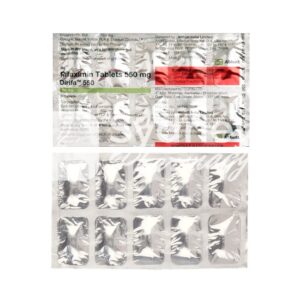
Xifaxan 550 mg is the strength labelled for hepatic encephalopathy in several countries, including the US. The 200 mg and 400 mg strengths on this site are different tablet strengths, which is why it matters to follow the leaflet and the directions given by your own prescriber and not a schedule written for another strength.
How rifaximin works
Rifaximin blocks the bacterial enzyme RNA polymerase, which bacteria need to make proteins, and in doing so stops them from multiplying. It is active against a broad range of gut bacteria. Because only a very small amount passes through the gut wall, the concentration is high in the intestine and low elsewhere in the body, which limits many of the systemic effects seen with other antibiotics.
In hepatic encephalopathy, the aim is to reduce the number of ammonia-producing bacteria in the gut so that less ammonia reaches the brain. In travellers’ diarrhoea, the aim is to treat the non-invasive bacteria in the intestine that cause watery diarrhoea. Rifaximin does not treat viral or parasitic diarrhoea.
What is rifaximin used for?
The conditions rifaximin is labelled for differ between countries, so always check the information that comes with your own tablets.
Travellers’ diarrhoea
The 200 mg tablet is labelled in several countries for travellers’ diarrhoea caused by non-invasive strains of Escherichia coli. It is not effective, and should not be used, when diarrhoea is accompanied by fever or blood in the stool, or when it is caused by organisms such as Campylobacter jejuni, Salmonella or Shigella. In those cases a different treatment is needed and medical assessment is important.
Hepatic encephalopathy
Hepatic encephalopathy is a decline in brain function that occurs when the liver cannot clear toxins such as ammonia, often in people with cirrhosis. Rifaximin is labelled to reduce the risk of recurrence of episodes of overt hepatic encephalopathy in adults. It is commonly used alongside lactulose, and in several countries this is the labelled use of the 550 mg Xifaxan tablet.
Irritable bowel syndrome with diarrhoea
In some countries, including the United States, rifaximin is also labelled for irritable bowel syndrome with diarrhoea (IBS-D) in adults. This indication is not shared by every country, so ask your doctor what applies to you.
Why labelled uses differ
Each regulator evaluates and approves its own product information, and a medicine is not registered for the same uses in every country. A use that is labelled in one country may be unlicensed in another, which is why your doctor’s advice and the leaflet in your pack take precedence over any general summary.
Rifaximin dosage and how to take it
Dosing depends on the condition, the strength of tablet and the country in which the product is registered. The figures below come from widely used product information and are for orientation only. Your doctor will give you the schedule that applies to you.
- Travellers’ diarrhoea: a 200 mg tablet three times a day for three days in the US label for adults and adolescents aged 12 and over.
- Hepatic encephalopathy: 550 mg twice a day in the Xifaxan label, taken long term, usually together with lactulose.
- IBS-D: 550 mg three times a day for 14 days in the US label, with the possibility of retreatment as directed.
Rifaximin tablets can be taken with or without food and are swallowed with water. Finish the course your doctor prescribes for an infection, and do not carry on taking it for longer than directed. The shop also lists a 400 mg strength; where dosing is not clear from the pack or prescription, ask your doctor or pharmacist before taking the first dose, and do not combine strengths to match a schedule you have read elsewhere.
If diarrhoea has not improved within a day or two, or if you develop fever, blood in the stool or worsening symptoms, stop and seek medical advice rather than continuing the treatment.
Who should not take rifaximin
Do not take rifaximin if you are allergic to rifaximin, to other rifamycin antibiotics such as rifampicin, or to any other ingredient in the tablet. Tell your doctor before starting if any of the following apply.
- You have severe liver disease. Blood levels of rifaximin are higher in people with severe liver impairment, and caution is advised.
- You are pregnant, planning a pregnancy or breastfeeding. There is limited information, so your doctor will weigh the benefits and risks.
- You have diarrhoea with fever or blood in the stool.
- You take cyclosporine or other medicines that inhibit the P-glycoprotein transporter.
- You are giving the tablets to a child. Check the age limits in the product information, as they differ between strengths and countries.
Rifaximin and Clostridioides difficile
As with almost all antibiotics, rifaximin can disturb the normal gut bacteria, and Clostridioides difficile-associated diarrhoea, including severe colitis, has been reported. If you develop watery or bloody diarrhoea during or after treatment, contact your doctor straight away. This can happen even weeks after the last dose. Do not take anti-diarrhoeal medicines such as loperamide in that situation unless your doctor says so.
Using rifaximin when there is no proven or strongly suspected bacterial cause is unlikely to help and can lead to resistant bacteria. Antibiotics should only be used when a doctor has judged them necessary.
Rifaximin side effects
Common effects
- Nausea, abdominal pain or bloating
- Headache and dizziness
- Tiredness
- In people with hepatic encephalopathy: swelling of the ankles or legs (peripheral oedema), fluid in the abdomen (ascites), and in some cases muscle spasm
- Flatulence and constipation have also been reported
Serious effects
- Severe allergic reactions, including swelling of the face, lips or throat, difficulty breathing or widespread rash
- Clostridioides difficile-associated diarrhoea
- Worsening symptoms, such as fever or blood in the stool
Report any unexpected symptom to your doctor or pharmacist.
Rifaximin interactions
Rifaximin is only minimally absorbed, so interactions are fewer than for rifampicin, an older rifamycin. Even so, there are points to know about. Cyclosporine, which inhibits P-glycoprotein, can raise rifaximin levels in the blood considerably, and caution is advised with other medicines in this category. Rifaximin may slightly affect warfarin, and doctors sometimes check the INR more often when treatment starts. Oral contraceptives are generally not expected to be affected, but if you have severe diarrhoea or vomiting any oral medicine may not be absorbed properly, so ask your pharmacist. Always provide a full medicine list to your prescriber.
Rifaximin compared with similar medicines
For travellers’ diarrhoea, other antibiotics such as azithromycin and the fluoroquinolones are used in some settings. Unlike them, rifaximin stays mainly in the gut, but it is not suitable when invasive bacteria are suspected. Many cases of travellers’ diarrhoea settle by themselves with fluids and rest, and a doctor can advise when antibiotics are appropriate.
For hepatic encephalopathy, lactulose is the standard first-line treatment and rifaximin is usually added to it, not used instead of it. Neomycin and metronidazole have also been used in the past, but they carry risks with long-term use that rifaximin generally does not, such as kidney and hearing effects with neomycin and nerve effects with metronidazole. Rifampicin is a related antibiotic but is absorbed throughout the body and is used for different conditions, including tuberculosis; it is not interchangeable with rifaximin.
Buying rifaximin online in Australia
If you are looking for rifaximin cost, rifaximin price in Australia or where to get rifaximin, the first thing to know is that rifaximin is a prescription medicine, and the right strength and schedule depend on the condition being treated. Sydney Pharmacy lists rifaximin in 200 mg and 400 mg strengths and in packs of 30, 60, 90 and 180 tablets. To buy rifaximin from the shop you should have a prescription from your doctor. For a short course such as treatment of travellers’ diarrhoea, a small pack is usually enough, while a long-term plan such as for hepatic encephalopathy would be set by a specialist. Larger packs generally work out cheaper per tablet than smaller ones, so the price per tablet falls as the pack size grows, but a large pack should be ordered only when your doctor has agreed to the quantity.
Because the Xifaxan tablet for this use is 550 mg and the shop lists 200 mg and 400 mg strengths, you should not assume the tablets are interchangeable; always follow the strength and directions on your prescription.
Storage
Keep rifaximin tablets in the original packaging, out of the reach of children, and store them as directed on the pack. Do not use them after the expiry date printed on the pack.
Delivery across Australia
Trackable service: 7–14 days, tracking number by email. Airmail service: 14–22 days, free for orders over about AUD 300. Discreet packaging. Delivery times are estimates.
Frequently asked questions about Rifaximin
What is rifaximin used for?
Depending on the country, rifaximin is labelled for travellers’ diarrhoea, for reducing recurrence of hepatic encephalopathy and, in some countries, for IBS with diarrhoea.
Is rifaximin the same as Xifaxan?
Xifaxan is a brand name for rifaximin. The active ingredient is the same, but tablet strengths and approved uses can differ between countries.
Can I buy rifaximin online in Australia?
Rifaximin is a prescription medicine, so you need a prescription from your doctor. Sydney Pharmacy lists rifaximin tablets for customers who have one.
Why is the rifaximin price different for each pack?
The price depends on the strength and the number of tablets, and larger packs usually cost less per tablet.
Can rifaximin be used for diarrhoea with fever or blood?
No. It is not suitable for diarrhoea with fever or blood in the stool. See a doctor promptly.
Does rifaximin get into the bloodstream?
Only a very small amount is absorbed, which is why it acts mainly in the gut. Absorption is higher in people with severe liver disease.
Safety note
This page is general information about rifaximin and is not medical advice. Follow your doctor’s instructions and the leaflet supplied with your tablets, and seek medical advice if symptoms worsen. In an emergency, call 000.