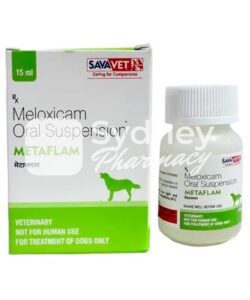
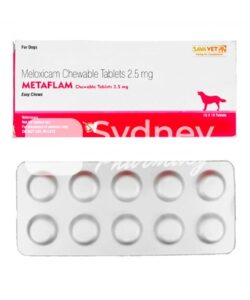
Metaflam Easy Chews (Meloxicam)
In stock
1mg · 2.5mg
from A$28.44
In brief
Meloxicam is an anti-inflammatory medicine used in veterinary care to manage pain and inflammation. The animal’s species and health determine suitability; a veterinary chew is not a human treatment.
Pharmacological Properties
Metaflam Easy Chews belongs to the group of non-steroidal anti-inflammatory drugs (NSAIDs).
Meloxicam exhibits anti-inflammatory, analgesic, and antipyretic effects. Its mechanism of action is based on preferential inhibition of cyclooxygenase-2 (COX-2), leading to reduced synthesis of prostaglandins involved in inflammatory processes, pain, and fever.
After oral administration, meloxicam is well absorbed from the gastrointestinal tract. It is highly bound to plasma proteins, metabolized primarily in the liver, and excreted mainly via feces and urine.
Indications for Use
Metaflam Easy Chews is indicated for the relief of inflammation and pain associated with acute and chronic musculoskeletal disorders, degenerative joint diseases, and postoperative pain.
The product is intended for use in dogs.
The product is intended for use in dogs.
Contraindications
Do not use in animals with hypersensitivity to meloxicam or other non-steroidal anti-inflammatory drugs.
Contraindicated in animals with gastrointestinal ulceration or bleeding, severe hepatic, renal, or cardiac disorders, as well as in cases of dehydration, hypovolemia, or hypotension.
Contraindicated in animals with gastrointestinal ulceration or bleeding, severe hepatic, renal, or cardiac disorders, as well as in cases of dehydration, hypovolemia, or hypotension.
Use is not recommended in puppies under the minimum age specified by the manufacturer or in pregnant and lactating animals unless under veterinary supervision.
Dosage and Method of Administration
Administer orally, preferably with or after food.
The dosage should be determined based on the animal’s body weight and the veterinarian’s recommendation.
Do not exceed the prescribed dose or duration of treatment.
Do not exceed the prescribed dose or duration of treatment.
Adverse Reactions
In rare cases, adverse reactions such as vomiting, diarrhea, loss of appetite, and lethargy may occur.
In very rare cases, gastrointestinal ulceration, renal impairment, or hypersensitivity reactions may develop. If any adverse reactions are observed, treatment should be discontinued and a veterinarian consulted.
Overdose
Symptoms of overdose may include gastrointestinal disturbances, depression, and signs of renal dysfunction. In cases of overdose, symptomatic and supportive treatment should be initiated under veterinary supervision.
Special Warnings and Precautions
Do not administer concurrently with other NSAIDs or glucocorticoids.
Ensure adequate hydration during the treatment period.
Use with caution in elderly, debilitated, or compromised animals.
Ensure adequate hydration during the treatment period.
Use with caution in elderly, debilitated, or compromised animals.
Veterinary supervision is recommended, particularly during long-term use.